How AI and Automation Are Changing IT Service Delivery
By Andrew
Roughly 53% of the code written in 2026 is AI-generated or AI-assisted. Only 17% of teams say AI testing tools have made a significant difference to how that code gets verified. Those two numbers, from the same survey of nearly 4,000 engineers, describe the central fact about automation in IT service delivery better than any adoption statistic: automation does not remove bottlenecks, it moves them.
That is worth stating plainly at the start, because the marketing version of this topic promises the opposite. AI-driven IT service delivery is real, measurable and already changing how support and operations work. It also creates a new category of work — verifying machine output, governing the models, managing the credentials automation runs under — that lands on someone. Understanding where the work goes is the difference between an automation programme that pays for itself and one that quietly relocates the cost.
The Shift Toward Intelligent IT Operations
Traditional IT service management is reactive by design. Something breaks, a monitoring threshold trips or a user notices, a ticket is created, it is triaged, routed, and eventually resolved. Every step is a queue, and every queue is where time is lost.
The shift underway replaces parts of that chain with pattern recognition. Instead of thresholds firing individually, correlation engines group thousands of related alerts into a single probable cause. Instead of a human reading a ticket to decide where it belongs, classification models route it on arrival. Instead of waiting for a failure, anomaly detection flags the drift that precedes it. Gartner’s own research agenda reflects the direction — its Predicts 2026 report on ITSM is framed around AI’s disruptive path through the discipline rather than its arrival.
Adoption follows the maturity curve rather than the hype. By 2026, an estimated 40% of large enterprises combine AIOps with observability practices, up from under 10% in 2023. But only about 15% are considering, piloting or running fully autonomous agents. The industry has broadly accepted machine assistance and remains cautious about machine authority — which is a reasonable place to be.
What Is AI-Driven IT Service Delivery?
AI-driven IT service delivery is a managed IT model in which detection, triage, routing and a defined subset of remediation are performed by software that learns from operational data, with engineers supervising the system and handling everything it cannot. The distinction from conventional automation is the input: scripted automation acts on rules you wrote in advance, while AI-driven operations act on patterns inferred from telemetry, ticket history and incident records.
Key Components of an AI-Powered IT Workflow
- Anomaly detection and predictive analytics — models that learn normal behaviour for a system and flag deviation before a threshold is breached, catching gradual degradation that static alerts miss entirely.
- Event correlation and noise reduction — collapsing alert storms into a single incident with a ranked probable cause. Vendors report alert-noise reductions of up to 85%; treat that as a vendor claim, but the mechanism is sound and the effect on on-call fatigue is real.
- Intelligent ticketing — automatic classification, prioritisation and routing on arrival, plus draft responses assembled from knowledge-base content.
- Self-healing runbooks — bounded remediation for well-understood failures: restarting a hung service, clearing a disk, rotating a stuck queue, re-running a failed job.
- Conversational support — resolving password resets, access requests and known-issue queries without a human touching the ticket. This is where the largest share of L1 volume goes, with estimates that AI absorbs 30% to 50% of it.
How Automation Complements Human IT Expertise
The useful framing is not replacement but redistribution. Automation is excellent at high-volume, well-defined, repetitive work with a known good outcome, and poor at novel situations, ambiguous trade-offs and anything requiring commercial judgment.
Strip out the repetitive half of an engineer’s queue and what remains is denser: the ambiguous incidents, the ones spanning three vendors, the ones where the right answer depends on which customer is affected. Teams that plan for this get more value from senior engineers. Teams that assume the remaining tickets are as quick as the old average end up with a shorter queue that takes just as long — and a burnout problem, because the easy wins that used to break up a shift are gone.
Core Benefits of AI and Automation in IT Services
The gains are genuine, and they concentrate in detection and triage rather than in resolution. Being precise about which stage improves is what separates a business case from a brochure.
Faster Incident Detection and Resolution
Mean time to resolution is the headline metric, and platform vendors report average reductions around 50% to 60% within the first year, rising to about 65% where self-healing is in place. These figures come from the companies selling the platforms, and no independent benchmark of comparable scale exists — so treat them as directional.
What is not in doubt is why the mechanism works. MTTR is dominated by detection and diagnosis, not repair. Most of the clock runs before anyone knows which of four hundred alerts matters. Compress that phase and the total falls, even if the fix itself takes exactly as long as it always did. That is also why the savings are worth pursuing: with Uptime Institute reporting that 57% of operators’ most recent major outage cost over $100,000, minutes removed from diagnosis are the cheapest minutes you will ever buy. The failure modes this does not catch are worth knowing too — we wrote about the incident class most postmortem templates miss separately.
Reduced Operational Costs Without Sacrificing Quality
Cost reduction comes from three places: L1 volume that never reaches a human, on-call hours not spent triaging noise, and outages shortened or avoided. Gartner has forecast that agentic AI will autonomously resolve 80% of common issues by 2029 with a 30% cut in operational costs — note carefully that this prediction is about customer service, not IT service desks, a distinction routinely dropped when the figure is quoted. IT support shares some characteristics with customer service and differs in others, notably the blast radius of a wrong autonomous action.
The savings also arrive net of new costs. Model licensing, telemetry storage, integration work and the engineering time to tune and re-tune classifiers are all real. Any business case quoting gross savings is incomplete.
Scalability Across Diverse Business Environments
Automation scales differently from headcount: capacity is close to free once built, but the build cost is largely fixed. That makes the economics strongly favourable for repetitive high-volume work and unfavourable for bespoke environments with low ticket volume — the same utilisation logic that governs the choice between local and cloud AI. Smaller organisations get the benefit most efficiently through a provider that has already absorbed the build cost across clients, which is a large part of why AI capability has become a differentiator among managed services providers rather than a purely in-house project.
AI in Software Development and Quality Assurance
Development is where the redistribution of work is easiest to measure, and where it has gone furthest wrong.
The 2026 Software Quality Pulse Report, based on responses from close to 4,000 engineers and engineering leaders, found that 53% of code is now AI-generated or AI-assisted, and that 61% of teams report a moderate to dramatic increase in QA demand as a result. A separate SmartBear survey of 273 software leaders in May 2026 found 70% saying application quality had already degraded, with 60% attributing quality problems to code creation outpacing testing capacity.
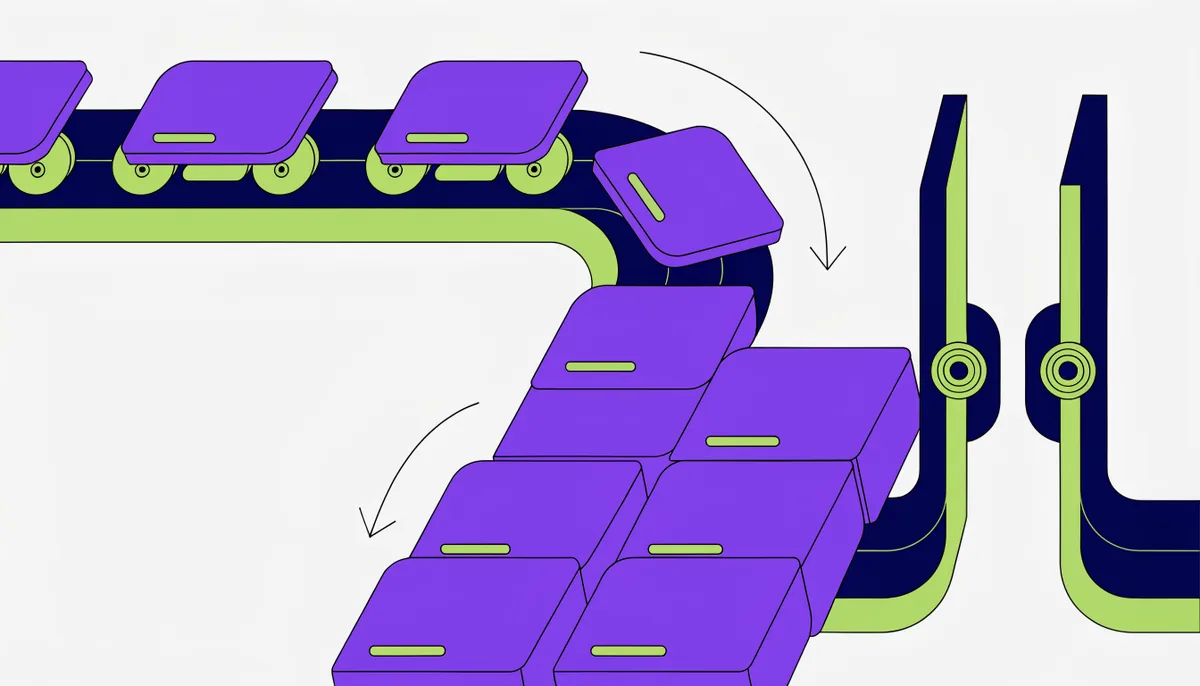
That is a coherent story rather than a contradictory one. Generation got dramatically cheaper. Verification did not. The bottleneck moved downstream, and in many organisations nobody moved the budget with it.
How Automated Testing Is Raising the Bar for Software Quality
Test automation is the obvious response, and it works — but the same survey shows only 17% of teams reporting significant impact from AI-driven testing tools, which suggests most are earlier in that journey than their code generation implies.
What AI genuinely improves in QA: generating test cases from requirements and existing code paths, maintaining selectors and locators so UI suites stop breaking on every cosmetic change, prioritising which tests to run against a given diff, and clustering failures so a hundred red results resolve into three real defects. What it does not do is decide what “correct” means for your business. Choosing the framework and the boundaries still determines the outcome more than the tooling does — our case study on selecting an autotest suite covers that selection process, and we have written before about how AI removed the boring half of manual QA rather than the discipline itself. A serious quality assurance practice now spends more of its time on what to verify and less on how to execute it.
GDPR, Compliance, and AI: Navigating the Overlap
IT operations data is personal data more often than teams assume. Ticket text contains names and case details. Access logs identify individuals. User behaviour analytics profile employees by definition. Feeding that into an AI system is a processing activity, and it is regulated.
Two GDPR provisions matter most. Article 35 requires a Data Protection Impact Assessment where processing is likely to result in high risk — systematic profiling and automated decision-making with significant effects both qualify. Article 22 governs decisions based solely on automated processing that produce legal or similarly significant effects, and requires a lawful basis, transparency about the logic involved, and a route to human review. An automated system that revokes an employee’s access based on a behavioural score is squarely in that territory.
Layered on top, the EU AI Act’s main obligations apply from 2 August 2026, with full application from 2 August 2027. And there is a governance problem specific to automation: every agent and integration is a credential. The ratio of non-human to human identities in a typical enterprise now exceeds 80 to 1, and in cloud-native environments reaches 144 to 1. Those identities rarely have an owner, a rotation schedule or an offboarding process.
Building Compliant AI Workflows From the Ground Up
Retrofitting compliance onto a deployed AI workflow is materially harder than designing it in, mostly because data flows are difficult to unwind once established. A workable sequence:
- Map the data before the model. Establish what personal data enters the system, from where, and on what lawful basis.
- Run a DPIA that is AI-specific. Standard templates underestimate model opacity, training-data memorisation and erasure obligations — a model that has memorised a support ticket cannot simply forget it on request.
- Keep a human decision point wherever Article 22 applies. Not a rubber stamp — a reviewer with the authority and the information to overturn the outcome.
- Minimise and redact at ingestion. Most operational AI value comes from patterns, not identities.
- Log the automation as carefully as the humans. Every autonomous action needs an audit trail showing what acted, under whose credential, on what input.
- Give every non-human identity an owner and an expiry. Apply the joiner-mover-leaver discipline you already apply to staff.
This is ordinary GDPR compliance work applied to a new class of processing, and it is auditable in the same way — see our working map of GDPR, HIPAA, SOC 2 and ISO 27001 for how the frameworks divide the territory. Where the model itself comes from a third party, the picture gets harder still, as we covered in what happens to compliance when you don’t own the weights.
What to Look for in an AI-Ready IT Services Partner
Nearly every provider now claims AI capability. The claim is cheap; the distinguishing evidence is specific and easy to ask for.
Questions to Ask Before Choosing an AI-Focused IT Partner
- Which stage is automated — detection, triage, or resolution? Providers who cannot separate these are describing a product roadmap, not their operation.
- What are your MTTR numbers before and after, on accounts like mine? A vendor’s platform benchmark is not the provider’s own result.
- What does the AI do without human approval, and what needs sign-off? A clear boundary is a sign of a considered deployment; a vague one is a sign of an untested one.
- Where does our operational data go, and is it used to train shared models? This is a contract term, not a technical detail.
- How do you handle a wrong autonomous action? Ask for the rollback path and an example of when it was used.
- Who owns the credentials your automation runs under, and how are they rotated?
- What happens when we leave? Models tuned on your data, and the runbooks built around them, should be documented and transferable.
The Future of IT Services in an AI-First World
Three trends are worth watching, none of which requires believing a forecast to prepare for.
Autonomy will expand from bounded remediation outward, and the constraint will be trust rather than capability — the 15% figure for autonomous agents reflects organisations weighing the cost of a wrong action, and that calculation improves only as rollback and audit mature. Detection is becoming continuous rather than periodic, dissolving the line between monitoring and security operations. And a governance discipline is forming around machine identity that barely existed three years ago, driven by an 80-to-1 ratio that grows every time a workflow is automated.
What none of this changes is where accountability sits. When an automated system takes the wrong action against a production environment or a data subject, the regulator, the customer and the board all address the same organisation they did before. The value of a good provider in that world is not that they have AI. It is that they can tell you exactly what it does, what it does not, and who is watching it.
Frequently Asked Questions
What is AI-driven IT service delivery and how does it differ from traditional managed IT services?
It is a managed IT model where detection, triage, routing and a defined subset of remediation run on systems that learn from operational data rather than fixed rules. Traditional managed services rely on human monitoring and scripted automation; the AI-driven version surfaces patterns humans would not catch and handles routine volume before it becomes a ticket, with engineers supervising and taking everything else.
How does automation in IT operations help reduce business downtime?
Most of the time in an incident is spent detecting and diagnosing, not repairing. Correlating alerts into a probable cause and flagging anomalies before thresholds break compresses that phase. Vendors report MTTR reductions of 50% to 60%, and Uptime Institute found 57% of major outages cost operators over $100,000 — so shortened diagnosis translates directly into money.
Can small and mid-sized businesses benefit from AI-powered IT services, or is it only for large enterprises?
They benefit, but usually through a provider rather than by building it. The economics are heavily front-loaded — integration, tuning and telemetry infrastructure cost roughly the same regardless of company size. A provider that has already absorbed that cost across clients makes the capability accessible at a scale where in-house development would not pay back.
How do AI tools in IT services stay compliant with GDPR and other data privacy regulations?
By treating operational data as personal data. That means a DPIA under Article 35 where processing is high-risk, a genuine human review point wherever Article 22 applies to automated decisions, minimisation and redaction at ingestion, and audit logs covering autonomous actions. The EU AI Act adds obligations from 2 August 2026, with full application in 2027.
What industries benefit the most from AI-enhanced IT service delivery?
Those with high ticket volume and high downtime cost: e-commerce, financial services, logistics, healthcare and SaaS. Volume gives the models enough signal to be accurate, and expensive downtime makes shortened diagnosis worth paying for. Regulated sectors gain the most from continuous evidence collection, but face the strictest limits on autonomous action.
How long does it typically take to integrate AI and automation into an existing IT infrastructure?
Expect a phased rollout across quarters rather than a switch-over. Telemetry and ticket-history integration comes first, then a baseline learning period so the models know what normal looks like, then supervised triage, then bounded self-healing for well-understood failures. Organisations that skip the baselining stage generate false positives and lose the team’s trust early.
Is AI-driven IT service delivery more cost-effective than maintaining a traditional in-house team?
For repetitive high-volume work, usually yes. But compare fully: model licensing, telemetry storage, integration and ongoing tuning are recurring costs, and the tickets left after automation are harder and take longer individually. The saving is real; it is smaller than gross deflection figures suggest.
- On September 10, 2026
- 0 Comment