
Local AI vs Cloud AI: The Break-Even Is About Utilization, Not Tokens
By Oleg
Ask two vendors what it costs to run your own AI models and you’ll get answers that don’t appear to describe the same universe. One quotes $1,500 to $4,000 for a capable GPU workstation, plus maybe $300 a month in electricity. Another puts the floor for an on-premise deployment at roughly $237,000 a year for an eight-GPU node. Both numbers are accurate. They’re just answers to entirely different questions, and the gap between them is where most on-premise AI decisions quietly go wrong.
The public conversation about local AI has settled into a comfortable framing: it’s a volume question. Run enough tokens through your own hardware and you eventually beat the API bill. That framing isn’t wrong, exactly. It’s just describing the second-most-important variable, and it lets companies skip past the one that actually determines the outcome.
Two Different Machines, One Confusing Conversation
Start by separating the tiers, because most cost comparisons silently mix them.
At the workstation end, a single GPU with 24GB or more of VRAM runs $1,500 to $4,000, with ongoing costs in the $50-to-$300-per-month range for power. This is genuinely enough to run a quantized mid-sized open-weight model for a small team, an internal tool, or a document-processing pipeline that doesn’t need to answer in under a second. A capable entry-level private server sits a step above that, in the $8,000 to $12,000 range, where one analysis puts cost parity with cloud APIs at three to six months once you’re past roughly 50,000 queries a month.
At the enterprise end, the arithmetic changes shape entirely. An eight-GPU H100-class node carries an on-premise floor around $237,000 per year once you account for hardware amortization, power, cooling, and the people who keep it alive. The cloud comparison isn’t cheap either — AWS H100 instances run $4.10 to $6.88 per GPU-hour, which works out to $287,000 to $482,000 annually for an equivalent eight-GPU node at full utilization.
Notice what just happened in that last sentence. *At full utilization.* That qualifier is doing more work than every other number in this article.
The Utilization Trap
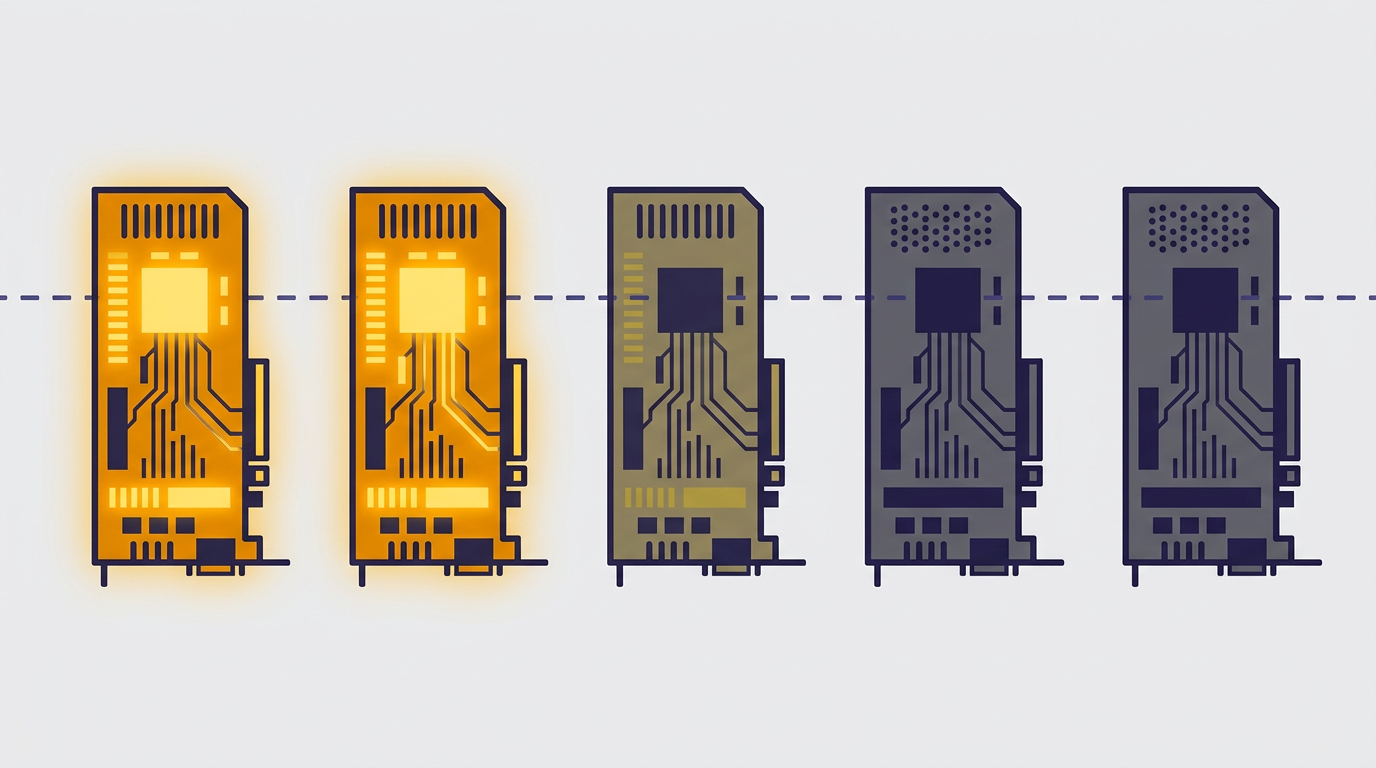
Here is the variable nobody puts on the slide. Cloud GPU pricing is metered — you pay for the hours you consume. On-premise hardware is not — you pay for the hardware whether it’s saturated or idle. Which means the entire cost comparison hinges on a single question: what percentage of the time will your GPUs actually be working?
The published break-even points cluster around 70 to 80 percent sustained utilization. Below roughly 70 percent, cloud generally wins on total cost of ownership. At 80 percent and above, on-premise can come out ahead over a three-year horizon when measured against hyperscaler pricing.
Now the uncomfortable number: most production inference teams operate somewhere between **40 and 65 percent** GPU utilization. Not because they’re careless, but because real traffic is lumpy. Requests arrive in bursts. Batching has limits before latency degrades. Nights and weekends exist. Model updates require idle capacity. The gap between “the hardware could theoretically run flat out” and “the hardware does run flat out” is exactly the gap between a project that pays for itself and one that quietly becomes an expensive space heater.
This reframes the decision. The question isn’t *do we have enough volume* — it’s *do we have enough sustained, predictable, schedulable volume to keep expensive silicon busy*. Batch workloads that can run overnight, document pipelines that can queue, internal tools with steady daily load: those pass the test. Bursty customer-facing traffic with a 3 a.m. trough usually doesn’t, no matter how impressive the monthly token total looks.
Where the Token Thresholds Actually Land
With the utilization caveat firmly attached, the volume numbers are still worth knowing.
Against frontier closed models, self-hosting an open-weight model on reserved GPU capacity breaks even somewhere around **2 to 5 million tokens per day**, assuming you keep utilization at 60 percent or better. Below about 1 million tokens a day, cloud APIs are almost always cheaper — the hardware simply never earns out. Above roughly 5 million tokens a day, local infrastructure starts to look strong.
There’s a more interesting number underneath those thresholds. For sustained high-volume workloads with a *mixed* task profile — where routine work gets routed to smaller, cheaper models and only hard queries reach the large one — on-premise deployments have been reported delivering 50 to 85 percent lower blended cost. That’s not a hardware win. That’s an architecture win, and it’s available in the cloud too. It just tends to get built when you’re staring at a fixed-capacity box and have an incentive to use it efficiently, rather than an elastic API that quietly absorbs sloppy routing.
A word of caution on the numbers circulating in this space: some of the most aggressive break-even claims — one vendor advertises payback “within four to eight weeks” — come from companies selling the hardware in question. Treat vendor payback math the way you’d treat a car dealer’s fuel-economy estimate.
The Answer Most Companies Land On Is “Both”
The framing of this debate as a binary is largely an artifact of who publishes the comparisons. Vendors sell one thing or the other, so the articles argue for one thing or the other. Companies that have actually deployed at scale tend to end up somewhere in the middle, and the middle is where the interesting engineering lives.
The pattern that keeps recurring: route by task, not by policy. Classification, extraction, summarisation of internal documents, tagging, routing, and the enormous volume of small structured calls that make up most production AI traffic go to a local open-weight model. The genuinely hard queries — long-context reasoning, multimodal input, anything customer-facing where a wrong answer is expensive — go to a frontier API. The local tier absorbs the volume, which is what keeps utilisation high enough to justify the hardware. The cloud tier absorbs the difficulty, which is what keeps quality acceptable without buying enough GPUs to run a frontier-class model yourself.
That split is also where the reported 50-to-85-percent blended cost reductions actually come from. It isn’t that local hardware is inherently cheaper per token — at low utilisation it plainly isn’t. It’s that a routing layer forces you to notice how much of your traffic never needed the expensive model in the first place. Teams that build the routing layer and then stay entirely on cloud APIs frequently capture a large share of the same savings, which is worth knowing before you buy anything.
A hybrid setup carries its own cost, and it’s an engineering cost rather than a hardware one: you now maintain two inference paths, a routing policy, evaluation for both tiers, and a fallback for when the local tier is saturated or down. For a small team, that complexity can easily outweigh the savings. For an organisation already running custom AI agents against internal data, it’s usually the architecture they arrive at eventually anyway.
The Costs That Don’t Appear in Any Comparison
Every published cost table stops at hardware, power, and API rates, because those are the numbers that can be looked up. The ones that decide whether a local deployment succeeds are harder to tabulate.
Someone has to own the inference stack. That means GPU driver and CUDA maintenance, inference server tuning, monitoring for degraded throughput, capacity planning as usage grows, and the security patching of an internet-adjacent service handling company data. None of this is exotic work, but it is continuous work, and it is nobody’s job until it is explicitly somebody’s job. Teams that deployed local models as a side project routinely discover a year later that they are running an outdated model on unpatched infrastructure because the person who set it up moved to another team.
Model refresh is the second unbudgeted line. Open-weight models improve on a cadence measured in months. A cloud API silently upgrades underneath you; a local deployment upgrades when someone plans it, tests it, re-runs evaluations, and manages the behavioural drift that comes with a new model version. That’s real project work several times a year, and the alternative — never upgrading — quietly converts your cost advantage into a capability disadvantage.
Latency is worth mentioning as the one operational factor that can push the decision toward local for non-cost reasons. A locally hosted model on the same network eliminates round-trip time to an external provider, which matters for interactive workloads, edge deployments, and anything where a few hundred milliseconds is the difference between a tool people use and a tool they abandon. It rarely justifies the build on its own, but it belongs in the column alongside cost and compliance rather than being treated as a footnote.
When Compliance Makes the Math Irrelevant
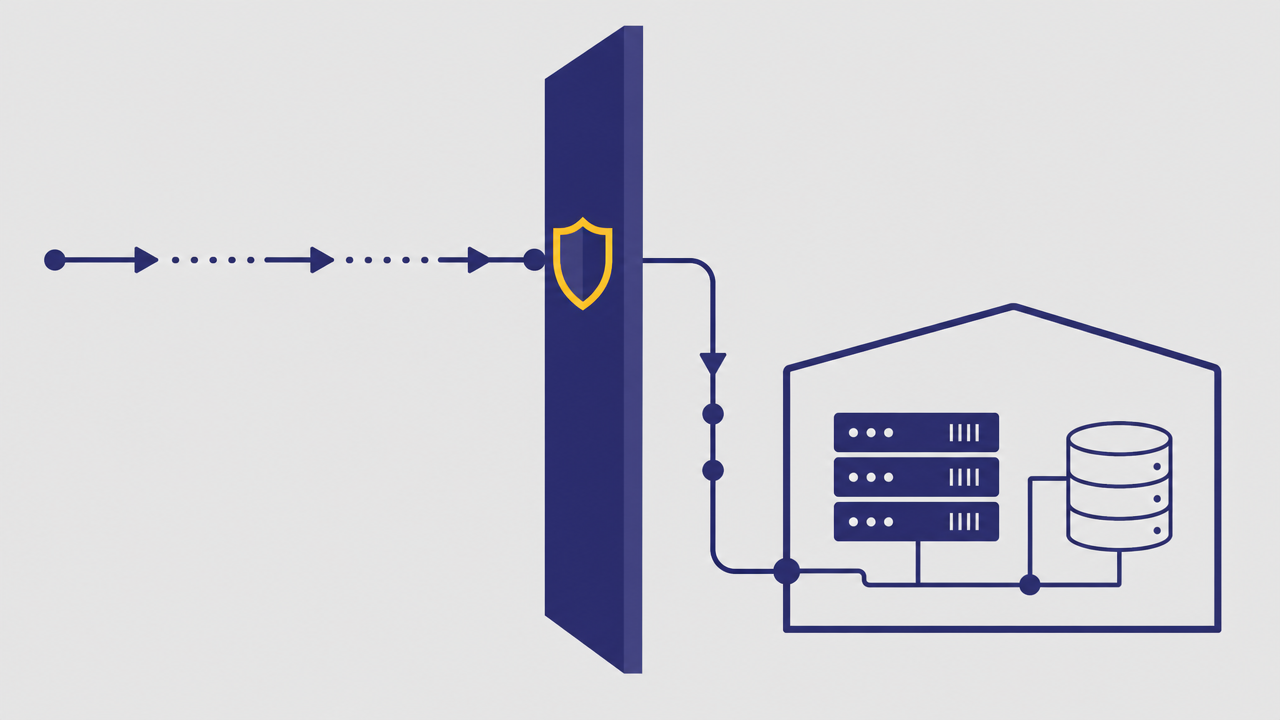
For a growing share of companies, none of the above decides anything, because the decision was made on different grounds entirely.
Data privacy and compliance are now the top concern for **72 percent** of mid-to-large enterprises deploying AI in production — up from 41 percent in 2024. That is a remarkable shift in two years, and it changes the character of the local-versus-cloud conversation. When the constraint is regulatory rather than economic, the cost comparison stops being a comparison. There is only one option that clears the bar.
The categories where this bites are specific and expanding. HIPAA-covered health data. CMMC and NIST 800-171 environments in the defense supply chain. Air-gapped networks where no external API call is possible by design. And, increasingly, GDPR-driven cases where the processing of personal data through a third-party model provider introduces a transfer, a processor relationship, and a set of Article 28 obligations that a company would rather not take on at all.
That last category deserves attention, because it’s the one most likely to catch a European SaaS company by surprise. Sending customer personal data to a cloud model provider isn’t automatically non-compliant — but it is automatically *something you have to document, justify, and defend*, complete with processor agreements, transfer assessments, and a defensible answer to what the provider does with the data. Running the model inside your own infrastructure doesn’t eliminate GDPR obligations, but it does collapse an entire category of them: no third-party processor, no international transfer question, no dependency on someone else’s retention policy. For organizations already building out a GDPR compliance program — or weighing whether their processing activities have crossed the threshold that requires a dedicated Data Protection Officer — keeping inference in-house removes several of the hardest questions from the assessment rather than answering them.
The AI Act adds a second regulatory clock to the same decision. Its high-risk compliance deadline moved to December 2027, but as we covered when that delay was agreed, GDPR obligations never moved at all. Architecture decisions made now will still be in production when both clocks have run out.
The Quality Objection Expired
For most of the past three years, the honest counterargument to local deployment was capability: open-weight models were meaningfully worse, and “cheaper but dumber” is a bad trade for anything customer-facing.
That objection has largely lapsed for mainstream business workloads. Open models in the Llama 3.3 70B and Qwen 2.5 72B class now perform comparably to GPT-4o-tier models on the tasks that make up the bulk of enterprise AI usage: summarization, document analysis, extraction, classification, and code assistance. Not on everything — frontier models still lead on the hardest reasoning, the longest contexts, and multimodal work. But the specific claim that you must use a frontier API to get usable results on ordinary business tasks no longer holds.
Which means the decision has genuinely moved from a capability question to an economics-and-compliance question. That’s a meaningful change, and it happened quietly enough that plenty of architecture decisions are still being made on 2023 assumptions.
How to Actually Decide
Strip the vendor numbers away and a workable decision sequence looks like this.
**Start with the constraint, not the cost.** If regulated data, air-gapped requirements, or data-residency obligations are in scope, the analysis is over — build it locally and budget accordingly. Cost comparisons only matter when both options are legally available to you.
**Then test utilization honestly.** Chart your actual expected load across a full week, including the quiet hours. If sustained utilization won’t clear roughly 70 percent, on-premise hardware will cost more than the API, regardless of what the annual token total says. Batchable workloads can be reshaped to pass this test; genuinely bursty ones usually can’t.
**Only then look at volume.** Under 1 million tokens a day, cloud almost certainly wins. Between 1 and 5 million, it depends entirely on the utilization answer above. Above 5 million with steady load, local hardware is likely cheaper — and the gap widens if you route routine work to smaller models rather than sending everything to the largest one.
**Name the owner before you buy the hardware.** Per the operational costs above, the question isn’t whether maintenance work exists — it’s whether a specific person’s job description includes it. If you can’t name that person in the planning meeting, you’re not budgeting for a local deployment, you’re budgeting for the first six months of one.
**Consider building the routing layer first.** If most of your traffic doesn’t need a frontier model, you can capture a large share of the savings before buying a single GPU — and you’ll learn what your actual task mix looks like, which is precisely the data the utilisation question above depends on.
The break-even calculation that matters isn’t the one in the vendor spreadsheet. It’s whether your organization has a workload shaped like sustained utilization, a compliance profile that rewards keeping data in-house, and someone whose job it is to keep the thing running. Two out of three usually means build it. One out of three usually means keep paying the API bill and revisit next year — which is a perfectly good answer, and considerably cheaper than a rack of idle GPUs.
- On July 27, 2026
- 0 Comment