Have any questions? +1 646.844.5712 (US)

  • Facebook
  • LinkedIn
  • Twitter
HiTech ServiceHiTech Service
  • Home
  • About
  • Services
    • Software Development
    • Customer Support
    • Quality Assurance
    • Managed Services
    • Compliance Audit
    • GDPR Compliance
    • Competency Center
    • Emergency IT Support
    • Software as medical device
    • Local AI Agent Development
  • Projects
  • GDPR
  • Articles
  • Case Studies
  • Contact
Menu
  • Home
  • About
  • Services
    • Software Development
    • Customer Support
    • Quality Assurance
    • Managed Services
    • Compliance Audit
    • GDPR Compliance
    • Competency Center
    • Emergency IT Support
    • Software as medical device
    • Local AI Agent Development
  • Projects
  • GDPR
  • Articles
  • Case Studies
  • Contact
SSD memory types. What to choose?

SSD memory types. What to choose?

For the past several years we’ve witnessed a hot competition on the market of storage devices.  Hard Disk Drives are in the red corner of the ring. Proven, affordable, but slow – they’ve been the part of the PC world for over half a century. In the blue corner – lightning-fast new SSD-devices that rely on NAND flash memory chips.


The question that the majority of people face, when it comes to choosing configuration for desktop or laptop, is HDD or SSD?

We’ve already written about the advantages and disadvantages of SSDs in our previous article. Now let’s go a bit deeper – if you decided to experience enormous performance and speed of modern solid-state disks, you should make another important choice before buying a particular model of SSD.

There are three different types of SSD memory (NAND) to choose from – SLC, MLC and TLC. What are the differences between them, and why you need to know this? What type is the best for you and your specific needs? We will try to answer all these questions in this article.

Cells and bits

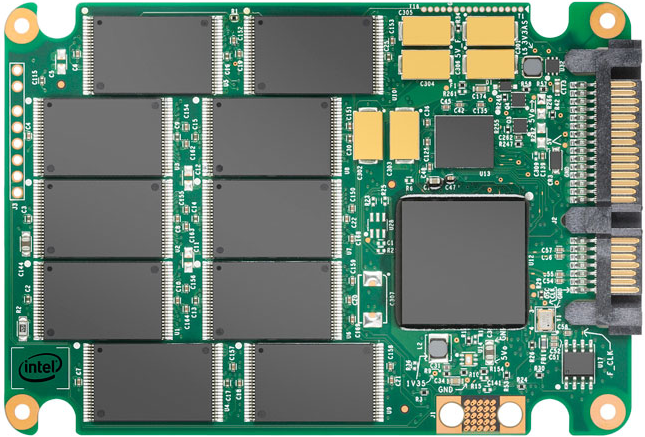
SSD consists of a number of NAND chips and a special controller that manages the processes of writing and reading data.

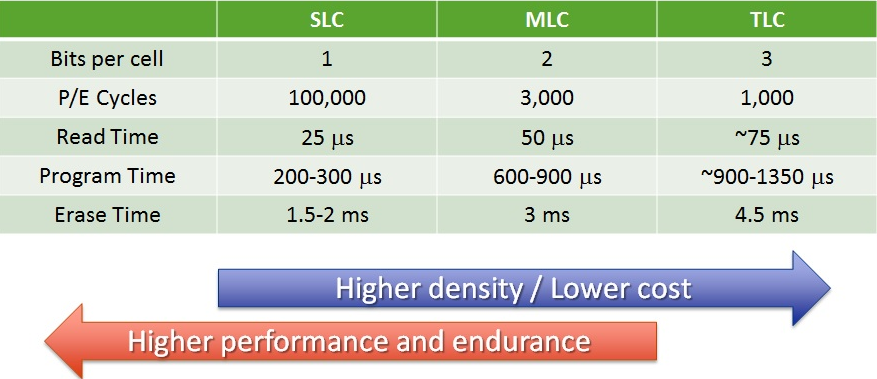
For this purpose, it divides the entire available memory into “cells” that are later used to store and read information. And here lies the fundamental difference between the three types of NAND-memory. Each SLC memory cell (Single Level Cell) can store only one bit of information – one or zero. The MLC (Multi Level Cell) – two bits or more, and TLC (Triple Level Cell) – three bits.

In theory, it seems that TLC technology is the most promising and has the greatest potential of the three, but the reality is exactly opposite. The reason here lies in the structure of NAND-chips used in SSD. The problem is that the more times you overwrite a memory cell, the more it wears out. After a certain number of rewrite operations, it just stops working.

Cost or reliability

This is the main disadvantage of SSD technology compared to old-style HDDs. HDD also wears out with time, but most often it starts to give clear signs of close malfunction – appearance of bad sectors (ie, some parts of the drive cannot store information anymore). Accordingly, it causes a number of system warnings, that in many cases help to save at least a part of the data stored from the “dying” drive by transferring it to another media.

Alas, in the case of SSD there are no clear signs of coming disaster – when the cells are worn out, they simply cease to work, and all the recorded data goes into electronic oblivion.
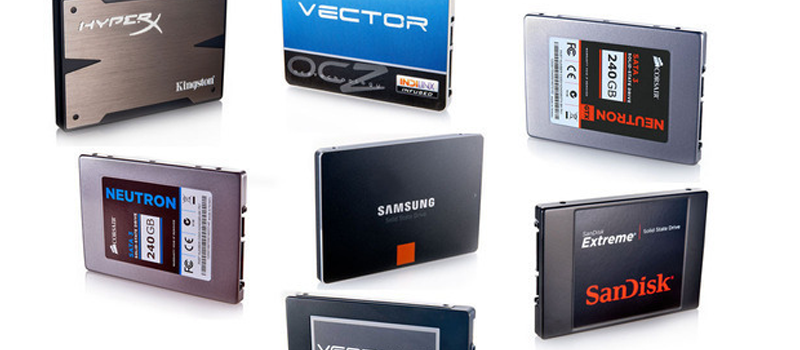
Ssd memory types 02 — SSD memory types. What to choose?

This may sound scary enough, but do not panic – this lack of technology is absolutely clear to SSD manufacturers, so they took a number of precautions to prevent the unfortunate scenario.
However, if you want to be as safe as possible from data loss on your SSD and max out its operation time, be sure to pay special attention to the type of NAND-chips that it has on board.
The most durable is SLC-memory. It ensures a 100,000 write cycles, and is also the fastest of the three types – single cell erase time ranges from 1 to 2.5 milliseconds.

The next in reliability are MLC-chips. Their overwrite times are estimated to range from 3000 to 15 000, and the erase speed – from 2.5 to 3.5 ms.

The last place is occupied by TLC-memory – from 1000 to 5000 overwrite cycles and speed of 4 to 5 milliseconds.


What’s the best choice?

Now you think that everything is clear – it is necessary to take the SLC and everything will be fine. And now it comes to prices – a 64GB SSD by Intel with SLC NAND memory on board will cost you approximately $200 or even more.  SLC technology is mostly used in specific servers that undergo huge read/write load and require high safety and reliability – banking servers,  government agencies etc.

Now that you consider SLC is not an option, there are only MLC and TLC left. Prices here are much more acceptable, and the choice here depends on the purpose of use.
Ssd memory types 03 — SSD memory types. What to choose?

“Overwrite cycles” is a rather vague parameter for an ordinary user. To be more specific – tests show that with daily data load of about 20 GB (read / write) a typical TLC 128GB SSD can guarantee 5-6 years of performance – more than enough for any average home or office PC. At the same load MLC-device promises a few more years of performance – I’m sure that in 8-10 years you will consider to change this drive, taking into account the rapid growth of technology.

To sum up, SSDs with TLC NAND on board provide the most reasonable ratio between reliability, speed and cost per gigabyte. However, if you want to increase the level of data security and are ready to overpay a bit, then MLC solid-state drive is your choice.

We would recommend to use a small MLC-device with a capacity of 60-120 GB as a system disk, so that your important files will be better protected, and the cost will remain within reasonable limits.

For other needs like playing games, you can pay attention to TLC NAND with a volume of 256GB or more. Doing so, you get the best price per gigabyte, and in case of disk failure, the worst that can happen is reinstalling your games.


  • On September 5, 2016
  • 0 Comment

Leave Reply Cancel reply

Your email address will not be published. Required fields are marked *

Recent Posts
  • The Password Memo Was Honest. The Checklist Wasn’t.
  • As Is: How Software Became the Only Product You Could Legally Sell Broken
  • The Production Incident Class Your Postmortem Template Doesn’t Have
  • Why Load Test Numbers Lie
  • When Config Became Executable: The Twenty-Year Pattern Behind Supply Chain Attacks
Categories
  • ai (8)
  • android (18)
  • apple (36)
  • chart (18)
  • cloud (1)
  • fix (42)
  • games (11)
  • google (31)
  • hardware (73)
  • healthcare (3)
  • how to (231)
  • internet (92)
  • ios (23)
  • macos (3)
  • microsoft (82)
  • mobile (36)
  • news (74)
  • optimization (17)
  • osx (4)
  • outsourcing (8)
  • qa (3)
  • regulation (7)
  • review (120)
  • security (40)
  • software (160)
  • windows (150)
Archives
  • August 2026
  • July 2026
  • June 2026
  • May 2026
  • August 2025
  • March 2025
  • February 2025
  • April 2023
  • March 2023
  • February 2023
  • January 2023
  • March 2022
  • January 2022
  • December 2021
  • November 2021
  • October 2021
  • September 2021
  • August 2021
  • July 2021
  • June 2021
  • May 2021
  • April 2021
  • March 2021
  • February 2021
  • January 2021
  • December 2020
  • November 2020
  • October 2020
  • September 2020
  • August 2020
  • July 2020
  • June 2020
  • May 2020
  • April 2020
  • March 2020
  • February 2020
  • January 2020
  • December 2019
  • November 2019
  • October 2019
  • September 2019
  • August 2019
  • April 2019
  • March 2019
  • February 2019
  • January 2019
  • December 2018
  • November 2018
  • October 2018
  • September 2018
  • June 2018
  • May 2018
  • April 2018
  • February 2018
  • January 2018
  • December 2017
  • November 2017
  • October 2017
  • June 2017
  • May 2017
  • April 2017
  • March 2017
  • February 2017
  • January 2017
  • December 2016
  • November 2016
  • October 2016
  • September 2016
  • August 2016
  • July 2016
  • June 2016
  • May 2016
  • April 2016
  • March 2016
  • February 2016
  • January 2016
  • December 2015
  • November 2015
  • October 2015
  • September 2015
  • July 2015
  • January 2015
Archives
  • August 2026
  • July 2026
  • June 2026
  • May 2026
  • August 2025
  • March 2025
  • February 2025
  • April 2023
  • March 2023
  • February 2023
  • January 2023
  • March 2022
  • January 2022
  • December 2021
  • November 2021
  • October 2021
  • September 2021
  • August 2021
  • July 2021
  • June 2021
  • May 2021
  • April 2021
  • March 2021
  • February 2021
  • January 2021
  • December 2020
  • November 2020
  • October 2020
  • September 2020
  • August 2020
  • July 2020
  • June 2020
  • May 2020
  • April 2020
  • March 2020
  • February 2020
  • January 2020
  • December 2019
  • November 2019
  • October 2019
  • September 2019
  • August 2019
  • April 2019
  • March 2019
  • February 2019
  • January 2019
  • December 2018
  • November 2018
  • October 2018
  • September 2018
  • June 2018
  • May 2018
  • April 2018
  • February 2018
  • January 2018
  • December 2017
  • November 2017
  • October 2017
  • June 2017
  • May 2017
  • April 2017
  • March 2017
  • February 2017
  • January 2017
  • December 2016
  • November 2016
  • October 2016
  • September 2016
  • August 2016
  • July 2016
  • June 2016
  • May 2016
  • April 2016
  • March 2016
  • February 2016
  • January 2016
  • December 2015
  • November 2015
  • October 2015
  • September 2015
  • July 2015
  • January 2015

New Apple IPhone 7 will be released on September 7th?

Previous thumb

Turning Off Windows Ink

Next thumb
Scroll

Services

  • Software Development
  • Quality Assurance
  • Customer Support
  • Managed Services
  • 24/7 Emergency IT Support
  • Competency Center
  • Local AI Agent Development
  • Software as a Medical Device

Compliance

  • Compliance Audit
  • GDPR Compliance
  • What is GDPR
  • ISO 9001:2015 Certification

Company

  • About Us
  • All Services
  • Projects
  • Case Studies
  • Articles
  • Contact
About HiTech Service

With 10 year experience of working together, we have reached tangible synergetic effect in performance and productivity, which results in highest quality services and satisfied clients.

Privacy Policy   Cookie Policy


  • Facebook
  • X
  • LinkedIn
CONTACT INFO
  • 900 Foulk Rd, Suite 201, Wilmington, DE, USA, 19803
  • Kudryavs’kyi descent 5b, Kyiv, Ukraine, 04053
  • +1 646.844.5712 (US)
ISO 9001:2015 certificate issued to HiTech Service LLC by Veritas
RIPE Atlas logo, the network measurement community HiTech Service takes part in
BrainBasket Foundation logo, IT education initiative HiTech Service supports
HiTech Service LLC membership badge of the Hi-Tech Office Ukraine association Dun & Bradstreet verified business badge for HiTech Service LLC
YouTeam partner badge for HiTech Service LLC
Hitech Service LLC

Copyright 2026