
Data Security Best Practices for IT-Driven Businesses
By Andrew
A data breach has never been more expensive. IBM’s Cost of a Data Breach Report 2026 puts the global average cost of a breach at $4.99 million, a 12% increase over last year and a record high. In the 2023 edition it was $4.45 million. Attackers are also changing tactics: Verizon’s 2026 Data Breach Investigations Report found that 31% of breaches now start with an exploited software vulnerability, overtaking stolen passwords as the most common way in, and 48% of breaches involve ransomware.
For a business that runs on software, cloud services and data, these numbers describe business risk, not only IT risk. This guide covers the threats that matter most today, the core practices that reduce them, how GDPR and other frameworks shape a security program, where managed IT services and AI help, and how to build a culture in which security does not depend on a single team.
Why Data Security Is a Business Priority, Not Just an IT Issue
Data security is the set of practices, technologies and policies that protect digital information from unauthorized access, corruption and theft throughout its lifecycle. In an IT-driven business, nearly every process depends on that information, so a breach rarely stays inside the IT department.
A serious incident hits several parts of the organization at once:
- Operations: ransomware can stop order processing, production or customer support for days.
- Finance: besides recovery costs, there are legal fees, regulatory fines, higher insurance premiums and lost revenue.
- Reputation: customers and partners reconsider whether to trust you with their data.
- Compliance: regulations such as GDPR require breach notification within tight deadlines and can lead to fines and audits.
- Sales: enterprise customers increasingly ask for security evidence in procurement. Without it, deals stall.
That is why responsibility has to be shared. Leadership sets the risk appetite and funds the program. IT and security teams build and run the controls. Every employee handles data and can either stop or enable an attack. The NIST Cybersecurity Framework 2.0 reflects this shift: its 2024 update added a sixth function, Govern, which places cybersecurity risk alongside the other enterprise risks that leadership manages.
What Are the Most Common Data Security Threats Businesses Face Today?
Most breaches come from a small set of recurring threats:
- Exploited vulnerabilities: unpatched software, especially internet-facing devices such as VPNs, firewalls and file transfer tools, which is now the leading initial access route in the Verizon data.
- Ransomware: malware that encrypts systems and, increasingly, steals data first to add extortion pressure.
- Phishing and social engineering: messages and calls that trick people into revealing credentials, approving MFA prompts or running malware.
- Stolen or weak credentials: reused passwords, leaked API keys and accounts without multi-factor authentication.
- Insider threats: employees or contractors who misuse access deliberately, or who make mistakes such as sending data to the wrong recipient.
- Misconfigured cloud environments: storage, databases and services exposed by a wrong setting rather than a sophisticated attack.
- Third-party compromise: attacks that enter through a supplier, a software update or a service provider with access to your systems.
We have written about several of these in depth, including how edge devices bought for protection became the way in and how supply chain attacks exploit configuration that became executable.
How Phishing and Social Engineering Target Your Team
Social engineering attacks the person instead of the system. It exploits trust, urgency, authority and helpfulness: a “CEO” asking for an urgent payment, an “IT help desk” asking for a password reset, a delivery notice with a malicious link. Generative AI makes these messages more convincing. Verizon reports that 15% of attack techniques are now bolstered by generative AI, and IBM notes a 56% increase in AI-driven attacks, led by deepfake impersonation.
Help desks are a favorite target because their job is to help. In the MGM Resorts attack, a single phone call to the help desk was enough to start an intrusion that took down the company’s systems.
Training works when it is specific and repeated. KnowBe4’s 2025 benchmarking found that about one in three employees (33.1%) click a simulated phishing email before training, dropping to 4.1% after 12 months of regular training and testing. Practical measures for staff:
- verify any request for money, credentials or access through a second, known channel;
- treat urgency and secrecy as warning signs;
- never approve an MFA prompt you did not start;
- make reporting easy, with a “report phishing” button and fast, friendly responses;
- give the help desk a strict identity verification procedure for password and MFA resets.
Why Misconfigured Cloud Systems Are a Growing Risk
Cloud platforms make it possible to create infrastructure in minutes, which also means a single wrong setting can expose data in minutes. A storage bucket set to public, a database open to the internet, an over-privileged service account or logging switched off are configuration errors, not hacking feats, but they lead to the same result.
The risk grows when cloud adoption outpaces governance: several teams creating resources in several accounts, with no shared baseline and no one checking. A joint advisory by the NSA and CISA on the top ten cybersecurity misconfigurations found the same problems again and again, even in organizations with mature security programs: default configurations, poor separation of user and administrator privileges, insufficient monitoring, weak MFA and poor credential hygiene.
The defense is to make configuration auditable:
- define infrastructure as code and review changes like application code;
- apply secure baselines, such as the CIS Benchmarks, to every account;
- run cloud security posture management tools that flag drift continuously;
- audit configurations and permissions at least quarterly, and after every major change.

Core Data Security Best Practices Every IT-Driven Business Should Follow
The practices below form the foundation of a data security program. None of them is new, which is the point: most successful attacks exploit the absence of one of them.
Implement Role-Based Access Control (RBAC)
Role-based access control grants permissions according to job roles instead of individual requests. A support agent gets the access support agents need, and nothing more. This applies the principle of least privilege and reduces the attack surface: a compromised account can only reach what its role allows.
Steps to set it up and keep it working:
- Inventory systems and data and classify the data by sensitivity.
- Define roles from real job functions, and keep the number manageable.
- Map permissions to roles, starting from no access and adding only what each role needs.
- Separate administrative accounts from everyday user accounts, and require phishing-resistant MFA for them.
- Automate joiners, movers and leavers through the identity provider, so access changes when someone’s job changes or ends.
- Review access quarterly, with managers confirming who should keep which permissions.
- Use just-in-time access for sensitive production systems, granted for a limited time and logged.

Encrypt Sensitive Data at Rest and in Transit
Encryption turns readable data into ciphertext that is useless without the key. It protects data when other controls fail: a stolen laptop, an intercepted connection or a copied database backup.
- In transit: use TLS 1.2 or higher, preferably TLS 1.3, for all connections, including internal traffic between services and to databases. Disable old protocols and weak cipher suites.
- At rest: encrypt databases, file storage, backups and endpoint drives with AES-256 or an equivalent algorithm.
- Application-level: encrypt especially sensitive fields such as identity numbers, health data or payment details, so they stay protected even from people with database access.
- Key management: keep keys in a key management service or hardware security module, separate from the data, with rotation and access logging. Encryption is only as strong as the protection of its keys.
Encrypt wherever sensitive data is stored or moves: servers, cloud storage, laptops, mobile devices, removable media, backups and data sent to partners.
Conduct Regular Vulnerability Assessments and Penetration Testing
A vulnerability assessment is an automated, broad scan for known weaknesses. A penetration test is a targeted attempt by skilled testers to exploit weaknesses the way a real attacker would. Both find problems before attackers do, which matters more than ever now that exploitation of vulnerabilities leads the breach statistics.
A practical cadence:
| Activity | Frequency | Scope |
|---|---|---|
| Vulnerability scanning | Continuous or at least monthly; weekly for internet-facing systems | All servers, endpoints, cloud resources and network devices |
| Dependency and code scanning | Every build | Application code and open-source libraries |
| Penetration testing | At least annually and after major changes | Internet-facing applications, internal network, cloud environment |
| Configuration audit | Quarterly | Cloud accounts, identity provider, firewalls |
| Critical patches | Days, not weeks | Anything on CISA’s Known Exploited Vulnerabilities list first |
Testing only helps if the findings are fixed. Track remediation against deadlines based on severity, and retest. Our article on the gap between a patch’s release and its deployment shows why speed matters.
Establish a Clear Incident Response Plan
An incident response plan defines how the organization detects, handles and recovers from a security incident. Most plans follow the lifecycle established by NIST’s incident handling guide, SP 800-61, whose 2025 revision maps the same activities onto the functions of the Cybersecurity Framework 2.0:
- Preparation: roles, contacts, tools, logs and backups ready before anything happens.
- Detection and analysis: monitoring that spots the incident and a process to confirm and scope it.
- Containment: isolating affected systems and accounts to stop the spread.
- Eradication: removing malware, closing the entry point and resetting credentials.
- Recovery: restoring systems from clean backups and monitoring for reinfection.
- Lessons learned: a post-incident review that changes processes and controls.
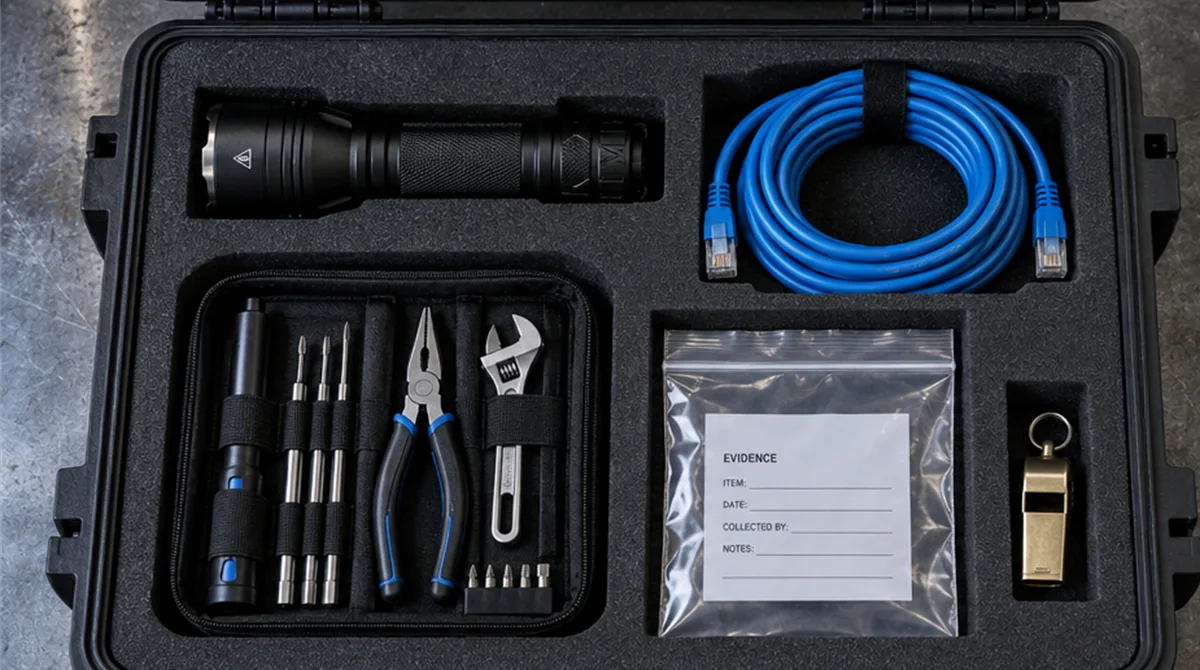
A strong plan also names who decides, including who can take systems offline, who talks to customers and the media, and who handles regulatory notifications. It includes contact details for legal counsel, cyber insurance and forensic support, and it stores a copy offline, because the incident may take down the systems the plan lives on.
Test the plan regularly. A tabletop exercise once or twice a year, walking through a realistic scenario such as ransomware on a file server or a leaked database, reveals gaps while there is still time to fix them. Restore tests prove that backups work.
How GDPR and Compliance Frameworks Shape Your Security Strategy
Regulations turn security from good practice into a legal obligation. GDPR’s Article 32 requires security measures appropriate to the risk, names encryption and pseudonymization explicitly, and requires a process for regularly testing the effectiveness of those measures. Article 33 requires notifying the regulator of a personal data breach within 72 hours where feasible. These requirements shape what you log, how fast you can investigate and how you document decisions.
Other frameworks add their own expectations: ISO/IEC 27001 for an information security management system, SOC 2 for service providers, PCI DSS for payment data, HIPAA for US health data. They overlap heavily, which our working map of GDPR, HIPAA, SOC 2 and ISO 27001 lays out.
Compliance audits and security improvement reinforce each other when audits are treated as feedback rather than a box to tick. Every audit finding is a security improvement with a deadline, and every control you build should produce evidence an auditor can check. Be careful about the gap between documented and real controls, though. A policy that nobody follows protects nothing, a problem we described in the password memo that was honest when the checklist wasn’t.
Non-compliance is expensive. GDPR fines reach up to €20 million or 4% of global annual turnover, and European regulators issued about €1.2 billion in fines in 2025 alone. Contractual penalties, lost customers and litigation can add more. For software teams, our guide on how GDPR compliance impacts software development covers the requirements in detail.
The Role of Managed IT Services in Strengthening Data Security
A managed IT services provider takes on the ongoing operation of security controls that many businesses struggle to staff internally. Security is a 24/7 discipline, and few mid-sized companies can afford a full in-house team that covers monitoring, patching, incident response and compliance around the clock.
The core benefits:
- Continuous monitoring: a provider watches logs and alerts outside business hours, when many attacks start.
- Patch management: updates tested and deployed on a schedule, with emergency procedures for actively exploited vulnerabilities.
- Threat detection and response: endpoint detection and response (EDR) tools, a security operations function and a team that knows what to do when an alert fires.
- Backup and recovery: backups that are monitored, kept offline or immutable, and restore-tested.
- Compliance support: evidence collection, policies and preparation for audits.
Whether to outsource security or build it in-house depends on your size, risk and budget. We compare the options in managed IT services vs. in-house IT.
What to Look for in a Managed IT Security Partner
- Experience: a track record with businesses of your size and industry, with references you can check.
- Certifications: company-level certifications such as ISO 9001 for quality management and ISO/IEC 27001 for information security, and certified staff.
- Proactive monitoring: clear statements of what is monitored, when, and how quickly they respond, written into the SLA.
- Incident response readiness: a documented process, defined roles and experience handling real incidents, not only tooling.
- Compliance expertise: practical experience with GDPR and the frameworks your customers expect, since the provider will often process personal data as your processor.
- Transparency: regular reports, access to your own data and logs, and a clear exit plan.
HiTech works to an ISO 9001:2015 certified quality management system and has helped clients meet international security standards, become GDPR compliant and check corporate accounts against known database leaks.
How AI and Automation Are Enhancing Data Security Capabilities
AI-powered security tools analyze far more events than a human team can review. They establish what normal behavior looks like for users, devices and applications, and flag anomalies such as a login from an unusual location, a service account suddenly reading large volumes of data, or a process encrypting files at high speed.
The financial effect is measurable. IBM found that organizations making extensive use of AI and automation in security saved $1.93 million per breach compared with those using none, mostly by detecting and containing breaches faster.
Automation reduces human error and speeds up response:
- Automated triage: alerts enriched with context and prioritized, so analysts start with the real threats.
- Playbooks (SOAR): routine responses, such as isolating an infected laptop or disabling a compromised account, executed in seconds.
- Automated patching and configuration checks: fewer forgotten systems and less drift from secure baselines.
- Phishing analysis: reported emails analyzed automatically, and similar messages removed from every mailbox.
AI also cuts both ways. Attackers use it to write better phishing, impersonate voices and scale their operations, and AI tools inside the company create new data flows that need governance. The practical outcome for IT-driven businesses is faster detection and response with the same team, provided humans remain in charge of decisions. We look at the broader shift in how AI and automation are changing IT service delivery.
Building a Security-First Culture Within Your Organization
Technology alone does not protect data, because people configure the systems, approve the requests and click the links. A security-first culture is one in which employees understand the risks, follow secure practices by default and report problems quickly without fear of blame.
Practical steps:
- Regular, short training tied to real roles and real threats, not one long annual video.
- Simulated phishing campaigns run regularly, with immediate, constructive feedback.
- Clear reporting policies: one obvious way to report a suspicious email, a lost device or a mistake, and a thank-you when people do.
- Leadership buy-in: executives who complete the training, follow the same rules and talk about security as a business priority.
- Secure defaults: password managers, MFA and automatic updates make the secure choice the easy one.
- Security champions: people in each team who answer questions and bring local issues to the security team.
How to Measure the Effectiveness of Your Security Awareness Program
Measure behavior, not only attendance:
| Metric | What it shows | Direction you want |
|---|---|---|
| Phishing simulation click rate | How many people fall for realistic lures | Down over time |
| Phishing report rate | How many people recognize and report lures | Up over time |
| Time to report | How quickly the first person reports a real or simulated attack | Down |
| Real incident reports | Whether people report suspicious activity outside of tests | Up, with fewer false negatives |
| Training completion rate | Coverage of the program | Close to 100% |
| Repeat clickers | Whether specific people need extra support | Down |
A rising report rate is often a better sign than a falling click rate: it means people are actively part of the defense. Review the metrics quarterly and adjust the training to the threats you actually see.
Strong data security comes from combining a few well-run practices: controlled access, encryption, testing, a rehearsed response plan, compliance as feedback and people who know what to do. If you want an outside view of where your business stands, our managed services team can assess your environment and help you close the gaps.
Frequently Asked Questions
What is the most important data security practice for small and mid-sized IT businesses?
Strong identity and access control: multi-factor authentication on every account, especially email, remote access and administrative accounts, combined with least-privilege access. Credential abuse and phishing remain among the most common ways in, and MFA blocks most of those attacks at low cost. Close behind are fast patching of internet-facing systems and tested, offline backups.
How often should a business conduct a data security audit?
Run a full security audit at least once a year and after major changes such as a cloud migration, an acquisition or a new critical system. Between audits, scan for vulnerabilities continuously or monthly, review access rights quarterly, audit cloud configurations quarterly, and run penetration tests at least annually.
What is the difference between data security and data privacy?
Data security protects data from unauthorized access, loss and corruption, through measures such as encryption, access control and monitoring. Data privacy governs how personal data is collected, used and shared, and whether individuals’ rights are respected. Security is necessary for privacy, but not sufficient: a perfectly secured database can still hold data collected without a legal basis.
How does GDPR compliance relate to overall data security strategy?
GDPR makes security a legal requirement for personal data. Article 32 requires security appropriate to the risk, including encryption, resilience and regular testing, and Article 33 requires breach notification within 72 hours. In practice, a good security program covers most of GDPR’s technical requirements, while GDPR adds privacy-specific obligations such as data minimization and data subject rights.
What should be included in a business incident response plan?
The plan should define roles and decision-makers, contact lists (including legal, insurance and forensic support), how incidents are classified by severity, step-by-step procedures for detection, containment, eradication and recovery, communication and regulatory notification procedures, evidence preservation, and a post-incident review process. It should be stored offline and tested at least once a year.
How can managed IT services improve a company’s data security posture?
A managed IT services provider adds continuous monitoring, disciplined patch management, threat detection and response, backup management and compliance support, delivered by a team that does this full-time. For most small and mid-sized businesses, this provides around-the-clock coverage and specialist skills that would be expensive to hire in-house.
Is encryption alone enough to protect business data?
No. Encryption protects data if storage media are stolen or traffic is intercepted, but it does not stop an attacker who logs in with stolen credentials, because the system decrypts data for authorized users. It also does nothing against ransomware encrypting your files or an employee sharing data by mistake. Encryption has to work alongside access control, MFA, monitoring, backups and training.
- On October 15, 2026
- 0 Comment