Have any questions? +1 646.844.5712 (US)

  • Facebook
  • LinkedIn
  • Twitter
HiTech ServiceHiTech Service
  • Home
  • About
  • Services
    • Software Development
    • Customer Support
    • Quality Assurance
    • Managed Services
    • Compliance Audit
    • GDPR Compliance
    • Competency Center
    • Emergency IT Support
    • Software as medical device
    • Local AI Agent Development
  • Projects
  • GDPR
  • Articles
  • Case Studies
  • Contact
Menu
  • Home
  • About
  • Services
    • Software Development
    • Customer Support
    • Quality Assurance
    • Managed Services
    • Compliance Audit
    • GDPR Compliance
    • Competency Center
    • Emergency IT Support
    • Software as medical device
    • Local AI Agent Development
  • Projects
  • GDPR
  • Articles
  • Case Studies
  • Contact
An abstract glowing AI network hand offering a golden percentage pie-slice icon toward a distant classical government building

OpenAI Wants to Give the US Government a 5% Stake. The Pitch Compares It to Alaska’s Oil Fund — But AI Isn’t Oil.

By John

OpenAI has proposed handing the U.S. government a 5 percent equity stake in the company — worth roughly $42.6 billion at the $852 billion post-money valuation the company closed in March 2026. Sam Altman’s public rationale isn’t “the government deserves a cut because it’s powerful.” It’s a specific, borrowed model: the Alaska Permanent Fund, the sovereign wealth vehicle that invests Alaska’s oil revenue and pays annual dividends to every state resident. Altman wants leading AI companies to each carve off 5 percent of equity into something similar, so the public shares directly in AI’s financial upside the same way Alaskans share in oil wealth.

It’s a clean pitch. It’s also built on an analogy that falls apart exactly at the point that matters most: where the underlying value actually comes from.

The Alaska Model, and Why Altman Picked It

An oil pump-jack rig mirrored by a data-center server rack, both feeding a stream of dividend coin icons down to a row of small human silhouettes

The Alaska Permanent Fund works because oil is a finite, physically extracted resource that sits under state-owned land — the state has a straightforward legal and moral claim to a share of value pulled out of the ground within its borders, and the fund exists to convert that claim into direct payments to residents rather than letting it evaporate into general government spending. It’s popular, durable (running since 1976), and politically easy to defend: nobody disputes that the oil belongs, in some real sense, to the state before a company extracts and sells it.

Altman’s framing borrows the *popularity* of that model — broad-based public benefit from a valuable resource — without the underlying legal claim. Alaska’s oil is a physical asset the state has sovereign rights over. OpenAI’s $852 billion valuation is built from software, compute infrastructure OpenAI purchased and operates, and models trained largely on data scraped from the public internet and licensed content — none of which the federal government holds anything like Alaska’s ownership claim over. The proposal isn’t “the government owns 5% because it’s entitled to the underlying resource.” It’s “OpenAI is choosing to give the government equity,” a fundamentally different, and much more discretionary, transaction dressed in the language of a resource-sharing model that doesn’t actually map onto how AI value gets created.

What OpenAI Actually Gets Out of It

Altman reportedly began pitching this concept directly to the Trump administration in early 2025 — well over a year of quiet groundwork before the proposal became public via reporting in July 2026. The stated goal, per OpenAI’s own framing, is defusing mounting political pressure in Washington. That’s worth taking at face value: a company operating at OpenAI’s scale, training on internet-scraped data, sitting adjacent to ongoing debates about AI’s labor market and safety implications, and courting enormous continued capital investment, has real incentive to trade a slice of equity for a friendlier regulatory and political relationship with the administration that will shape whatever rules eventually apply to it.

Altman has engaged directly with President Trump, Commerce Secretary Howard Lutnick, and Treasury Secretary Scott Bessent — a level of direct executive-branch access that’s itself a form of value for a company navigating AI policy, separate from whatever the equity stake accomplishes on paper.

The Parts That Still Aren’t Settled
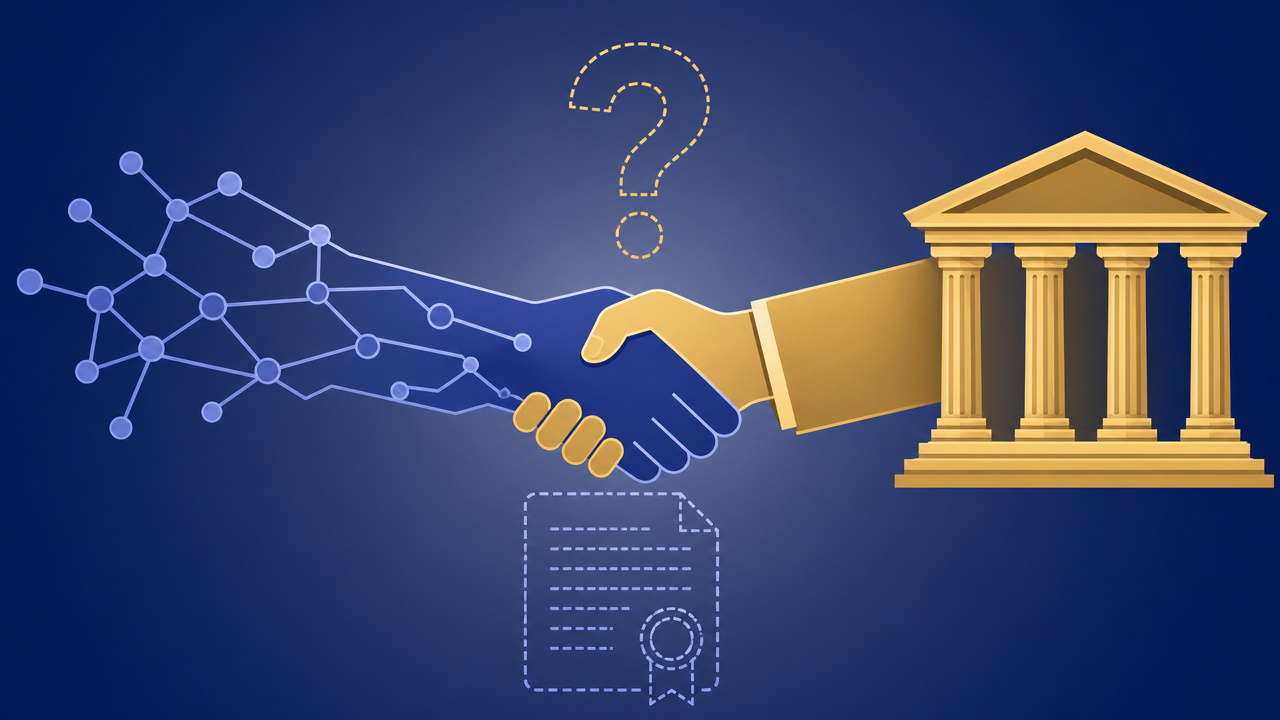
A handshake between an abstract AI network hand and a classical government-building hand, with a dashed question mark above and a partially sketched contract document below

Several things keep this firmly in “proposal,” not “policy.” Talks are described as conceptual, not concluded. Any actual implementation would likely require an act of Congress — meaning this isn’t a deal Altman and the administration can simply sign, but a structure that would need to survive the legislative process, with all the negotiation, opposition, and modification that implies. And Altman’s framing explicitly calls for *other* leading AI companies to make the same 5 percent commitment, not just OpenAI — but it’s unclear whether Anthropic, Google, Microsoft, or other major labs have any interest in following suit. A single company volunteering equity is a very different proposition than an industry-wide norm, and right now this is clearly the former dressed as a pitch for the latter.

Why the Framing Matters More Than the Number

If this deal happens roughly as proposed, the actual mechanics — a sovereign vehicle holding AI equity, paying some form of public dividend — would be a genuinely novel instrument in how governments capture value from technology companies, closer to a strategic industrial stake than a tax. But the Alaska comparison being used to sell it is doing a lot of rhetorical work to make a discretionary, company-initiated equity gift sound like a resource-royalty arrangement the public is owed. Whether that framing survives contact with Congress, and whether other AI labs actually follow OpenAI’s lead, will determine whether this becomes an industry norm or a one-off arrangement that mostly bought OpenAI political goodwill at a moment it needed it.

  • On June 15, 2026
  • 0 Comment
Tags: AI, OpenAI, policy, regulation, Sam Altman

Leave Reply Cancel reply

Your email address will not be published. Required fields are marked *

Recent Posts
  • Why Load Test Numbers Lie
  • When Config Became Executable: The Twenty-Year Pattern Behind Supply Chain Attacks
  • How Software Became a Medical Device
  • Compliant With What? A Working Map of GDPR, HIPAA, SOC 2 and ISO 27001
  • Local AI vs Cloud AI: The Break-Even Is About Utilization, Not Tokens
Categories
  • ai (7)
  • android (18)
  • apple (36)
  • chart (18)
  • cloud (1)
  • fix (42)
  • games (11)
  • google (31)
  • hardware (73)
  • healthcare (3)
  • how to (231)
  • internet (92)
  • ios (23)
  • macos (3)
  • microsoft (82)
  • mobile (36)
  • news (74)
  • optimization (17)
  • osx (4)
  • outsourcing (8)
  • qa (3)
  • regulation (7)
  • review (120)
  • security (37)
  • software (159)
  • windows (150)
Archives
  • August 2026
  • July 2026
  • June 2026
  • May 2026
  • August 2025
  • March 2025
  • February 2025
  • April 2023
  • March 2023
  • February 2023
  • January 2023
  • March 2022
  • January 2022
  • December 2021
  • November 2021
  • October 2021
  • September 2021
  • August 2021
  • July 2021
  • June 2021
  • May 2021
  • April 2021
  • March 2021
  • February 2021
  • January 2021
  • December 2020
  • November 2020
  • October 2020
  • September 2020
  • August 2020
  • July 2020
  • June 2020
  • May 2020
  • April 2020
  • March 2020
  • February 2020
  • January 2020
  • December 2019
  • November 2019
  • October 2019
  • September 2019
  • August 2019
  • April 2019
  • March 2019
  • February 2019
  • January 2019
  • December 2018
  • November 2018
  • October 2018
  • September 2018
  • June 2018
  • May 2018
  • April 2018
  • February 2018
  • January 2018
  • December 2017
  • November 2017
  • October 2017
  • June 2017
  • May 2017
  • April 2017
  • March 2017
  • February 2017
  • January 2017
  • December 2016
  • November 2016
  • October 2016
  • September 2016
  • August 2016
  • July 2016
  • June 2016
  • May 2016
  • April 2016
  • March 2016
  • February 2016
  • January 2016
  • December 2015
  • November 2015
  • October 2015
  • September 2015
  • July 2015
  • January 2015
Archives
  • August 2026
  • July 2026
  • June 2026
  • May 2026
  • August 2025
  • March 2025
  • February 2025
  • April 2023
  • March 2023
  • February 2023
  • January 2023
  • March 2022
  • January 2022
  • December 2021
  • November 2021
  • October 2021
  • September 2021
  • August 2021
  • July 2021
  • June 2021
  • May 2021
  • April 2021
  • March 2021
  • February 2021
  • January 2021
  • December 2020
  • November 2020
  • October 2020
  • September 2020
  • August 2020
  • July 2020
  • June 2020
  • May 2020
  • April 2020
  • March 2020
  • February 2020
  • January 2020
  • December 2019
  • November 2019
  • October 2019
  • September 2019
  • August 2019
  • April 2019
  • March 2019
  • February 2019
  • January 2019
  • December 2018
  • November 2018
  • October 2018
  • September 2018
  • June 2018
  • May 2018
  • April 2018
  • February 2018
  • January 2018
  • December 2017
  • November 2017
  • October 2017
  • June 2017
  • May 2017
  • April 2017
  • March 2017
  • February 2017
  • January 2017
  • December 2016
  • November 2016
  • October 2016
  • September 2016
  • August 2016
  • July 2016
  • June 2016
  • May 2016
  • April 2016
  • March 2016
  • February 2016
  • January 2016
  • December 2015
  • November 2015
  • October 2015
  • September 2015
  • July 2015
  • January 2015

Microsoft's Own AI Service Took Down Azure for Nearly 8 Hours — Because of a Change That Looked Fine in One Region

Previous thumb

A 10-Minute Phone Call Took Down MGM's Systems. The 19-Year-Old Behind a Similar Scheme Just Got Extradited.

Next thumb
Scroll

Services

  • Software Development
  • Quality Assurance
  • Customer Support
  • Managed Services
  • 24/7 Emergency IT Support
  • Competency Center
  • Local AI Agent Development
  • Software as a Medical Device

Compliance

  • Compliance Audit
  • GDPR Compliance
  • What is GDPR
  • ISO 9001:2015 Certification

Company

  • About Us
  • All Services
  • Projects
  • Case Studies
  • Articles
  • Contact
About HiTech Service

With 10 year experience of working together, we have reached tangible synergetic effect in performance and productivity, which results in highest quality services and satisfied clients.

Privacy Policy   Cookie Policy


  • Facebook
  • X
  • LinkedIn
CONTACT INFO
  • 900 Foulk Rd, Suite 201, Wilmington, DE, USA, 19803
  • Kudryavs’kyi descent 5b, Kyiv, Ukraine, 04053
  • +1 646.844.5712 (US)
ISO 9001:2015 certificate issued to HiTech Service LLC by Veritas
RIPE Atlas logo, the network measurement community HiTech Service takes part in
BrainBasket Foundation logo, IT education initiative HiTech Service supports
HiTech Service LLC membership badge of the Hi-Tech Office Ukraine association Dun & Bradstreet verified business badge for HiTech Service LLC
YouTeam partner badge for HiTech Service LLC
Hitech Service LLC

Copyright 2026